TEMA IFM home
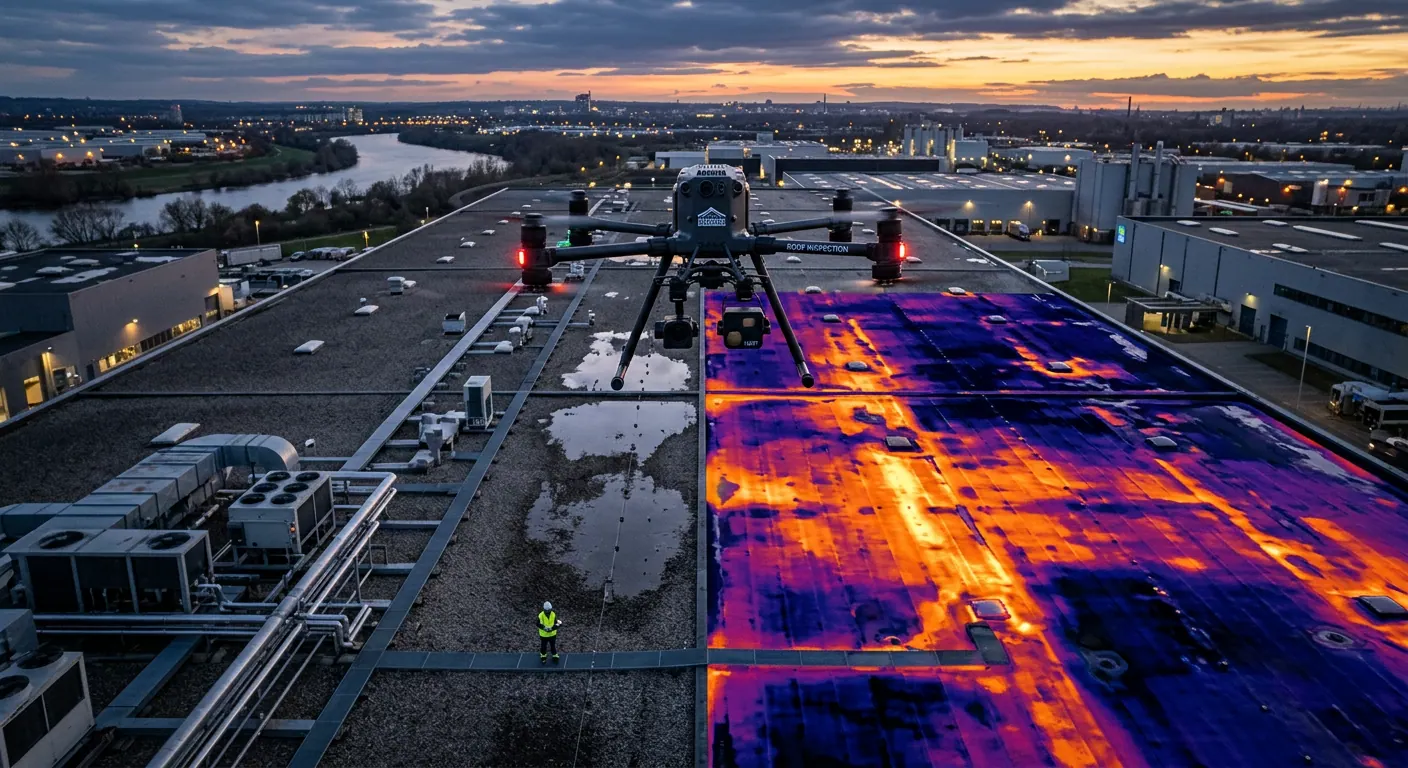
Inspection drone flying over a commercial roof with infrared overlay

Drone & Aerial Infrared

See what a walk inspection can’t.

Fixed-wing aircraft and drone infrared scans locate wet insulation across entire portfolios, rank every site by moisture, and show where a repair or re-skin can replace a full tear-off.

Outcomes

What drone & infrared monitoring delivers

Aircraft and drone infrared scans that find wet insulation across every roof.

  • Repair instead of replace

    Knowing exactly what is wet lets you replace sections or re-skin, not tear off entire roofs.

  • Rank the whole portfolio

    Every site ranked by wet square footage and percentage, so capital goes where it matters first.

  • No roof access needed

    Non-intrusive data capture with no disruption to operations or extended foot traffic.

Inspection drone flying over a commercial roof with infrared overlay

What this includes

Drone & Infrared Monitoring from TEMA IFM

  • Fixed-wing aircraft infrared scans for portfolios
  • FAA Part 107 licensed drone crews for single sites
  • Daytime visual and post-sunset thermal flights
  • Level III thermographer analysis
  • Sites ranked by moisture square footage and %
  • Core-cut verification of flagged areas
  • Before / after storm comparison
  • Imagery and reports stored in TEMA IQ

Aircraft or drone

The right platform for the size of the portfolio

TEMA flies both. Fixed-wing aircraft scan entire portfolios at once; drones handle single sites, tight spots and storm follow-up.

Best for multi-site portfolios

Fixed-wing aircraft

One flight covers dozens of buildings with consistent thermal and visual data across every site.

  • Large-area coverage in a single flight
  • Lab-grade cameras with higher payload capacity
  • Consistent data for portfolio-wide ranking
  • FAA-compliant airspace advantages
  • Most cost-effective at high volume
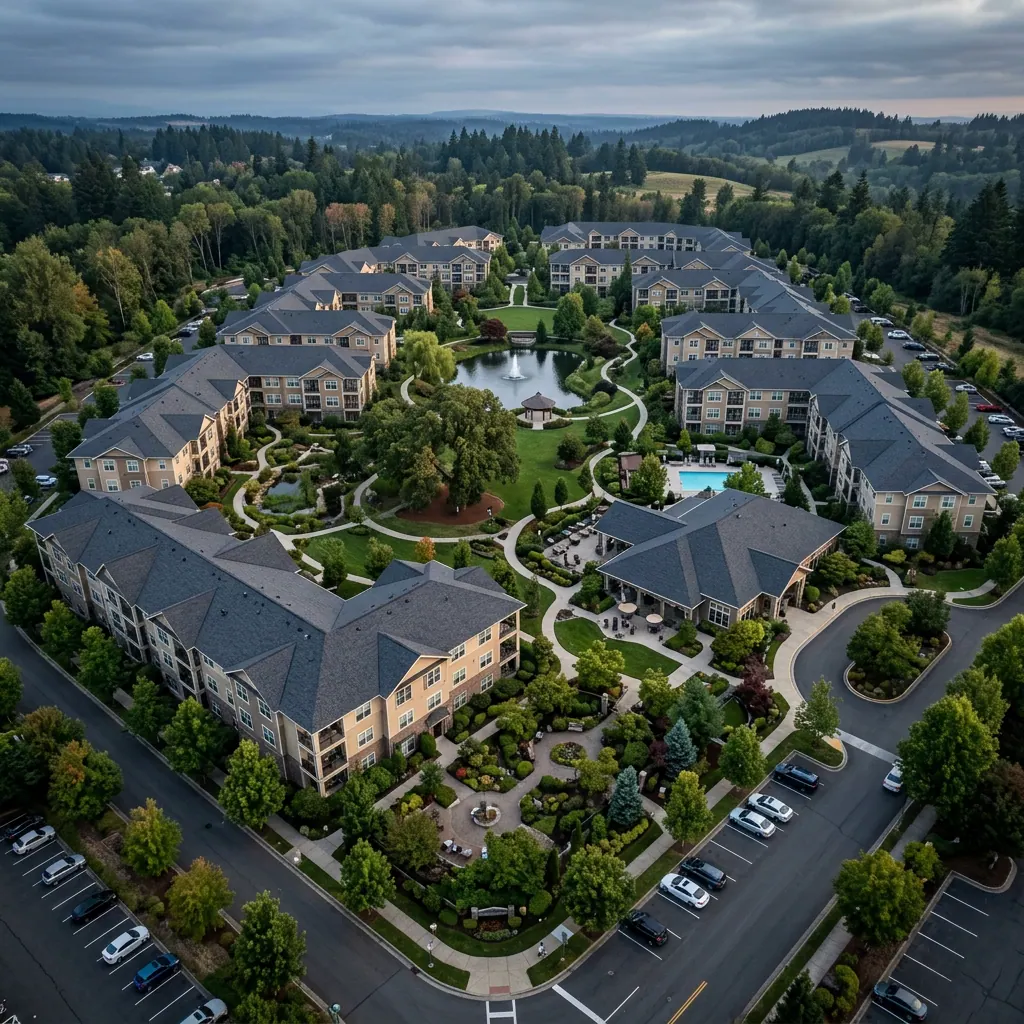
Best for single sites and follow-up

Drone

Fast, close-range capture for one building, a hard-to-reach roof or documenting a storm event.

  • Quick deployment to a single property
  • Close-range imagery of problem areas
  • Before and after storm documentation
  • Repeat flights for change detection
  • FAA Part 107 licensed pilots

How a scan works

Two flights. One clear picture of what is wet.

Water inside a roof reads warmer than dry roof after sunset; ponding water on top reads cooler. Pairing a daytime visual flight with a night thermal flight tells them apart.

  1. Step 1

    Midday visual flight

    High-resolution daytime imagery captured with the sun at its highest point to minimize shadows. This becomes the base layer.

  2. Step 2

    Post-sunset thermal flight

    A second flight after sunset, when wet insulation holds heat longest, using an infrared camera with sub-18mK thermal sensitivity.

  3. Step 3

    Level III analysis

    Every anomaly is checked against five moisture criteria using a patented process refined over 30 years and tens of thousands of scans.

  4. Step 4

    Ranked portfolio report

    Sites ranked by wet square footage and percentage, with blended imagery for each roof section, then verified on the roof with cores.

Reading the results

Wet percentage decides repair vs. replace

Two roofs can each have 1,000 sq. ft. of wet insulation. On a 3,000 sq. ft. roof that is 33% wet; on a 50,000 sq. ft. roof it is 2%. One gets budgeted for replacement, the other gets repaired.

  • 75%+Expedited replacement1–2 yrsFull tear-off including insulation; deck damage likely.
  • 50%Repairs pending replacement1–2 yrsReplacing the full roof is usually easier and more effective.
  • 33%Repairs pending replacement2–4 yrsDepending on location of flaws, replacement may be the better value.
  • 15%Replace + repairs + restore4–15 yrsSome sections need costly repairs; most still have cheaper options.
  • 8%Repairs + restore8–20 yrsTargetPortfolio target: insulation value intact, low-cost remediation available.
  • 5%Repairs + restore10–25 yrsNegligible load or condensation risk.
  • 3% or lessMinor repairs15–20 yrsTargetSite target: the cheapest repair options stay on the table.

Case study

Keeping $2.4 million out of the landfill

A national consumer company with a 1.4 million sq. ft. roof portfolio had a failed TPO system on five roof sections. The first recommendation was a full tear-off at $5–6 million.

TEMA’s aerial infrared scan showed the membrane had failed, but less than 1% of the insulation was wet. The dry insulation stayed in place and only a re-skin was needed, at roughly half the original estimate and backed by a full system warranty.

Saved vs. full tear-off
$2.4M+
Insulation found wet
<1%
Material kept out of landfills
674,625 lbs
Portfolio scanned
1.4M sq. ft.

FAQ

Drone & Infrared Monitoring questions

When is infrared most effective?

Thermal flights are flown shortly after sunset on a clear day, when wet insulation holds heat longer than dry areas. We wait at least 24 hours after rain, and up to 48 if roofs are still ponding.

How do you tell water on the roof from water in the roof?

Ponding water on the surface reads cooler than the roof and appears dark. Water trapped inside the roof reads warmer and appears light. The daytime visual flight confirms which is which.

The occupants report a leak, but the scan shows nothing. How?

It happens in about 5% of scans, when water reaches the interior without soaking the insulation. That points to a cheaper fix: a clogged RTU condensate line, wall or curb flashing, or condensation on cold pipes.

Aircraft or drone, which do we need?

For multi-site portfolios, fixed-wing aircraft cover the most roofs per flight with the most consistent data. Drones are ideal for a single building, hard-to-reach areas or storm follow-up.

Do you still walk the roof?

Yes. Aerial data tells our inspectors where to verify with core cuts and moisture meters.

Not sure where to start?

Start with a roof assessment. We’ll document condition, prioritize the work and show you what should happen next.